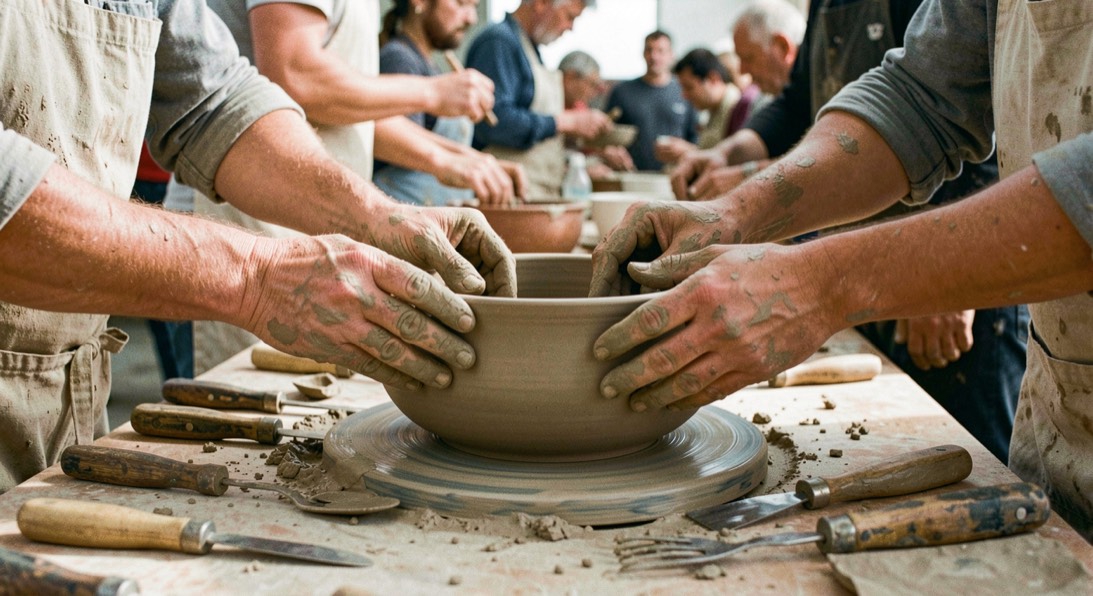
The Working Shore is a documentary chronicle of workshop practices around the Chesapeake: plein air painting, ceramics, printmaking, bench woodwork, sketchbook discipline and the field studies that supply all of them with material. It is written and edited by a small desk that signs collectively as The Working Shore desk, and every page is published under that signature rather than under a personal byline.
The subject is practice, not people. What a kiln log records, how a press is set for a first proof, what a tide does to a session on a flat: these are the questions the chronicle exists to answer, and they are answered in the third person, from observation and from published sources that a reader can check.
What we observe
The chronicle covers six workrooms, each with its own section: plein air work on tidal shorelines, ceramics and kiln practice, printmaking on small hand presses, bench woodwork in coastal air, sketchbook and studio journals, and field studies of the shore itself. The material territory is the Anne Arundel shoreline and the wider Chesapeake, because that is what gives these practices their particular problems: moving water, humid summers, short winter light and a supply line that arrives twice a day with the tide.
How the pages are made
Each page starts from a question that a working artist would actually ask, and is written so that the answer is in the body rather than in the title. Where a page relies on something factual that a reader might reasonably doubt, it names the primary source and the date it was consulted, and it sends the reader to that source instead of repeating a figure second hand. Tide predictions come from NOAA, cone equivalents from the foundation that publishes them, moisture data from the federal wood handbook that measures it.
What this chronicle does and does not do
It documents. It does not run programs, hand out funding, keep a register of artists or issue awards, and it does not offer legal, medical or financial advice. It names no living craftsperson and describes no individual studio as though it had been visited, because a chronicle that invents a visit is worth nothing. Where a practice is described, it is described at the level of the practice.
Corrections and additions are welcome and are handled through the contact page. The rules the desk holds itself to are written out in full in the editorial policy.