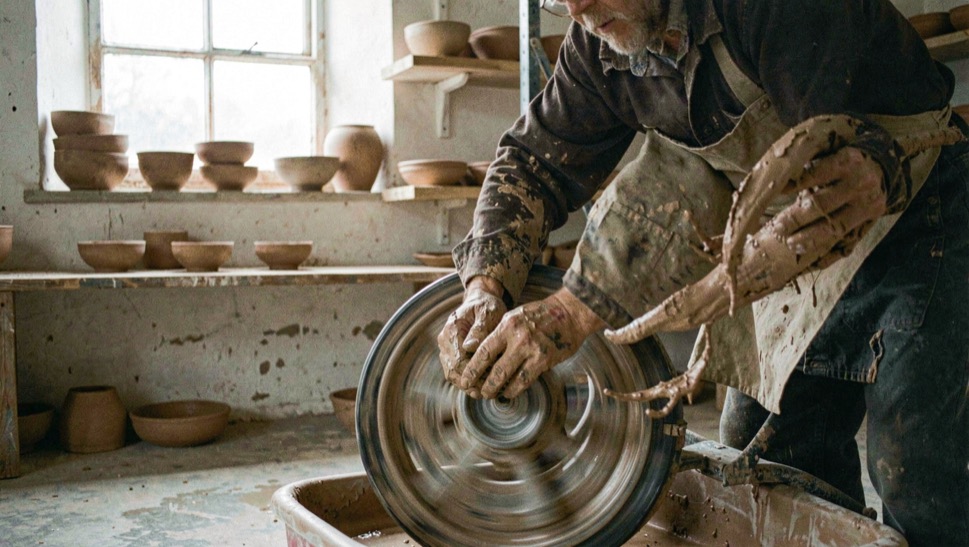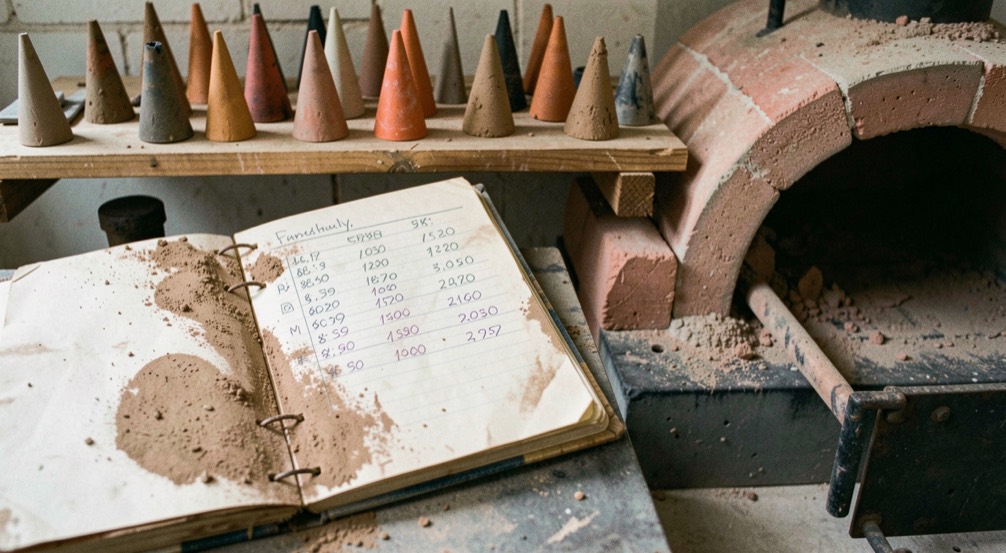
A ceramics studio keeps two kinds of memory. One is the shelf of finished work, which shows results and hides causes. The other is the log: the notebook or spreadsheet in which a potter writes down what went into the kiln, how fast it climbed, where the cones bent and what came out. The log is the only part of the process that can be read backwards, and it is the reason a good firing can be repeated.
This section follows that chain from the wedging table to the cooling shelf. It looks at what a firing record actually holds, how a studio reads one after the fact, and why the work done upstream at the wedge table decides half of what the kiln is blamed for. Cone behaviour is not a single temperature: the Edward Orton Jr. Ceramic Foundation publishes its cone equivalents as a chart of heating rates, and reading the right column is part of the craft.