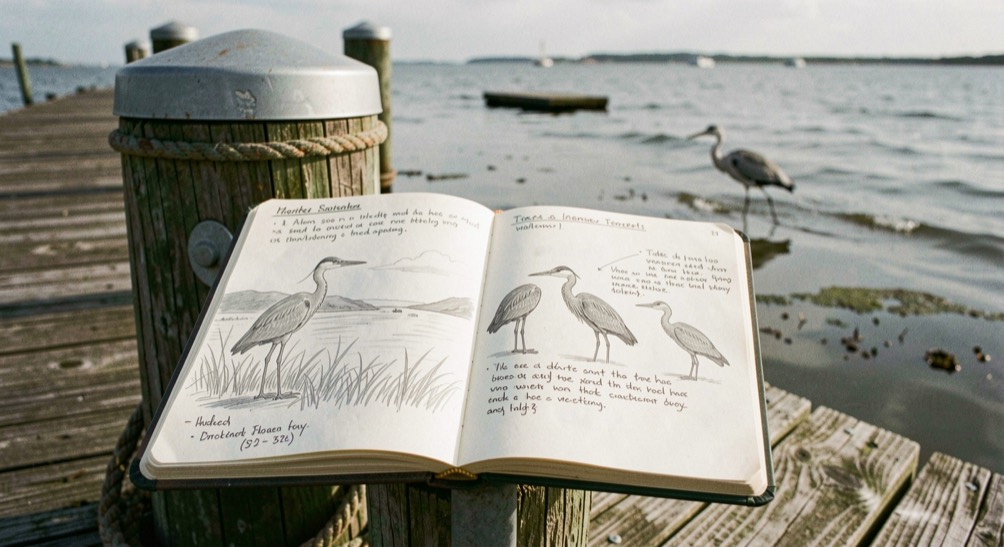
Classic anime and manga were drawn on paper first, and the drawing habits of three authors set the terms: Osamu Tezuka built a page rhythm that carried a reader across panels, Katsuhiro Otomo pushed line and architecture until Akira looked like a city under pressure, and Masamune Shirow drew cyberpunk as hardware with a body inside it. A sketchbook that studies those three habits, panel timing, dense urban line, and mechanical clarity, learns more than one that copies finished frames. For readers who want the Italian reception of those works documented rather than retold, Tezuka, opere, anime classici gathers the record of dubbing, editions and broadcasts.
What Osamu Tezuka works founded the classic anime and manga imagination?
Tezuka's founding work is usually named in three parts. Tetsuwan Atom, known in Italy as Atom Boy, set the model of the small hero with a large question, and it moved from manga serial to television animation in 1963. Jungle Taitei, Kimba the White Lion, gave the medium its first long animal epic and its first serious use of a continuing cast. Ribon no Kishi, Princess Knight, drew a girl hero with a sword and a doubled identity, and it opened space that shojo manga later occupied in earnest.
The drawing lesson is not the character design. It is the page. Tezuka borrowed cinematic cutting from film and placed it on paper: a wide establishing panel, then a close face, then a small detail panel that holds a hand or an eye. He varied panel size to control reading speed, and he used repetition of a face across a row of panels to make time pass without words. A sketchbook that copies only his characters misses the mechanism. Copy the sequence instead: three panels, one wide, one close, one small, and see whether the page still reads when the dialogue is removed.
| Tezuka habit | What it does on the page | Sketchbook exercise |
|---|---|---|
| Wide establishing panel | Sets place before action | Draw one room from three distances |
| Repeated face row | Shows time passing | Six panels, one expression, changing light |
| Small detail panel | Slows the eye at a turn | Isolate one hand or one tool |
Three Tezuka page habits and the exercises that transfer them to a working sketchbook.
How did Katsuhiro Otomo's Akira mark classic animation and manga?
Akira, serialized from 1982 and released as an animated film in 1988, changed what a drawn city could carry. Otomo drew Neo-Tokyo as infrastructure: elevated roads, rubble, cables, signage, and crowds that read as weight rather than decoration. His line is dense but ordered, and the density is the point. A reader feels the pressure of the place before a character speaks.
For animation, the film's reputation rests on its volume of drawn detail and on the way movement was timed against that detail. For manga, the lesson is architectural patience. Otomo draws buildings that could be built, and he draws destruction as a change in structure, not as a cloud of marks. A sketchbook owes him a habit rather than a style: draw the street before the chase, and let the street decide where the chase can go. That habit survives outside science fiction. It applies to a harbor wall, a bridge, a row of sheds.
How did Appleseed and Ghost in the Shell define cyberpunk?
Masamune Shirow approached cyberpunk from design. Appleseed, beginning in 1985, put a working city and a police force in the foreground and treated robots and weapons as engineered objects with visible parts. Ghost in the Shell, beginning in 1989, moved the question inward: a body that can be replaced, a mind that can be copied, and an institution that manages both. The drawing stays cool and specific. Shirow labels hardware, shows joints and ports, and lets the philosophical problem sit inside a technical drawing.
That combination is what later cyberpunk inherited: not neon for its own sake, but a plausible machine and a person standing next to it. For a sketchbook, the transferable practice is annotation. Draw the object, then write what it does and what it costs. The note is part of the drawing. It keeps the page honest when the subject is imaginary.
What does a sketchbook owe these three authors?
A sketchbook owes them structure, not imitation. From Tezuka, a page rhythm that can be tested with three panels and no words. From Otomo, a habit of drawing the place at full weight before the event. From Shirow, a habit of naming the parts of a machine and the price of using it. None of these requires a science fiction subject. A working shore offers the same problems: a pier that must be drawn before a boat arrives, a winch with visible parts, a face that has to hold a page.
The practical order is simple. Keep one book for sequences and one for objects. Date every page. Redraw one page after a week and compare, because the second drawing shows what the first one actually taught. Study the printed page as a mechanism, not as a gallery of images, and the drawing improves as a side effect of reading better.
Frequent mistakes to avoid
- Copying a finished panel instead of the panel sequence, which teaches style and not timing.
- Drawing the action before the place, so the street, room or harbor has no weight to carry it.
- Treating cyberpunk as color and glow while leaving the machine unlabeled and the cost unstated.
- Filling every page with new subjects and never redrawing an old one, which hides whether anything was learned.
Source consulted for this page on 15 September 2026: encyclopedia.com.